
Introduction: Home Garden Designs
A lovely garden can absolutely alternate the appearance and surroundings of a domestic. Whether you’ve got a massive outdoor, a small front vicinity, a balcony, a terrace, or only a slender space beside your private home, the proper Home Garden Designs can flip an ordinary place into a chilled and appealing vicinity.
Modern lawn layout is now not constrained to large lawns and pricey landscaping. Today, house owners are using vertical gardens, container flora, raised beds, ornamental pathways, seating areas, kitchen gardens and occasional-maintenance vegetation to make better use of available space. Even a small region can appear spacious while flowers, fixtures and ornamental features are organized carefully.
The most important issue is to layout a garden around your life-style. Before choosing flora or buying decorations, don’t forget sunlight, drainage, available space, weather and the quantity of time you can spend on renovation. A sustainable lawn can also be attractive, purposeful and easy to preserve whilst the proper flora and substances are decided on for the location.
What Are Home Garden Designs?
Home garden designs discuss the planning and arrangement of flora, pathways, seating, bins, lights, decorative features and other out of doors elements around residential assets. An exact garden design combines beauty with capability. For instance, a front lawn may be aware of improving the entrance of a residence, at the same time as an outside lawn can encompass a seating location, lawn, vegetable beds or a kid’s play area. A balcony may additionally use vertical planters because ground space is confined.
The exceptional garden isn’t necessarily the one containing the largest variety of vegetation. Instead, it is a lawn in which each element has a reason and the overall format stays easy to apply and preserve.
Important Things to Consider Before Designing a Home Garden
Before beginning your garden undertaking, observe the space cautiously. Measure the to be had vicinity and observe how plenty sunlight it receives at some stage in distinct elements of the day.
1. Available Space
The length of your garden determines the kind of format you can create. A big outdoor can accommodate bushes, lawns, pathways and seating, while a small balcony can be higher acceptable to pots, placing planters and vertical gardening.
2. Sunlight
Different plants require exceptional quantities of sunlight. Some pick direct sunlight, even as others carry out higher in partial color. Understanding the mild situations of your lawn enables you to choose vegetation that is much more likely to thrive.
3. Water and Drainage
Water availability and drainage are extraordinarily essential. Containers and lawn beds ought to now not remain waterlogged after heavy rainfall. In regions with seasonal monsoons, drainage merits unique attention.
4. Maintenance
Think honestly about how an awful lot of time you may spend gardening. If your time table is busy, pick out low-preservation flowers, simple layouts and green watering structures instead of growing a design that calls for day by day interest.
5. Purpose of the Garden
Decide what you want from a distance. Do you need plant life, veggies, privateness, a place to sit, a kid’s place, or certainly greenery around the home? Your solution should manual the whole design.
Best Home Garden Designs for Different Spaces
| Garden Type | Best Design Ideas | Main Advantage |
|---|---|---|
| Front Garden | Flower beds, pathway, shrubs, planters | Improves entrance appeal |
| Backyard Garden | Lawn, seating, trees, flower beds | Suitable for relaxation |
| Balcony Garden | Hanging pots, vertical planters, railing planters | Saves floor space |
| Terrace Garden | Containers, raised beds, seating | Uses unused rooftop space |
| Small Garden | Vertical gardening, layered plants, narrow beds | Maximizes limited space |
| Kitchen Garden | Herbs, vegetables, fruit plants | Provides fresh produce |
| Courtyard Garden | Potted plants, stone paths, seating | Creates a peaceful central space |
| Low-Maintenance Garden | Hardy plants, mulch, simple planting | Reduces regular maintenance |
1. Small Home Garden Designs
Small gardens can be pretty appealing while designed with a clear format. One of the largest mistakes is putting too many pots and ornamental objects everywhere. Instead, create an easy shape and leave enough open space for movement. Use vertical cabinets, wall planters, hanging baskets and narrow boxes to increase planting area without taking over precious ground vicinity. Plants of different heights also can create depth and make a compact garden appear greater and more interesting.
Another useful approach is to locate taller flora towards the lower back and shorter vegetation closer to the front. This creates layers and forestalls smaller plant life from being hidden.
2. Modern Home Garden Designs
Modern gardens typically focus on clean strains, easy planting preparations and purposeful outdoor spaces. You can integrate green flora with stone, concrete, wooden or different landscaping substances.
A modern-day lawn may encompass:
- Geometric planting beds
- Simple stone pathways
- Minimal out of doors furnishings
- Decorative pots
- Small timber or shrubs
- Outdoor lighting fixtures
- A compact water characteristic
- Vertical greenery
The goal isn’t to fill every place. A balanced design with open space could make a garden appearance cleaner and extra sophisticated.
3. Front Home Garden Designs
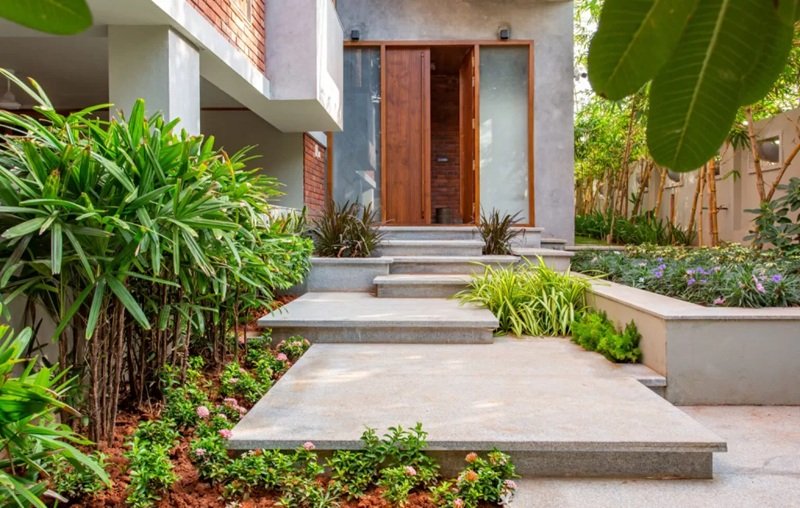
The front lawn is the first outside location traffic generally sees, so its design could have a chief effect on the general look of an asset. The front garden can encompass a pathway main to the primary entrance, flowering plants along the edges and a few larger plant life for top. Avoid blocking off doors, windows or taking walks in areas with oversized flowers.
If the front area could be very small, use planters near the doorway rather than creating a complicated panorama. A few cautiously selected plants can provide an attractive look without creating a crowded feeling.
4. Backyard Garden Designs
The outdoors offers you more freedom because it can serve a couple of functions. You can create separate zones for flowers, seating and pastime. For instance, one corner can incorporate flowering vegetation, any other can have a small seating arrangement, and a facet area can be used for herbs or veggies.
An outdoor no longer must comprise a large lawn. Replacing some gardens with planting beds, pathways or useful lawn areas can create a more practical area.
5. Vertical Garden Designs
Vertical gardening is particularly useful for residences and small houses. Instead of spreading flora throughout the floor, plant life is arranged upward using walls, cabinets, trellises or especially designed systems.
Vertical gardens may be used for:
- Herbs
- Small flowering flora
- Climbers
- Decorative foliage
- Kitchen-lawn flowers
- Privacy screening
Using vertical space is one of the handiest approaches to growth greenery while the to be had ground region is restricted.
6. Balcony Garden Designs
A balcony can turn out to be a lovely green nook with the right selection of packing containers. Start by considering the quantity of daylight and the burden that the balcony can adequately help. Use lightweight packing containers where appropriate and preserve heavier gadgets allotted instead of concentrating them in one area.
Railing planters, striking baskets and vertical shelves can provide greenery without the usage of an excessive amount of ground area. Keep a clear on foot location so the balcony stays snug to use.
7. Terrace Garden Designs
Terrace gardens can turn unused rooftop areas into attractive outdoor areas. Container gardening is a sensible alternative because flora can be rearranged when vital.
A terrace garden can include:
- Large bins
- Raised planting beds
- Herb gardens
- Flowering vegetation
- Small trees in which suitable
- Outdoor seating
- Shade systems
- Decorative lighting fixtures
Before installing a large terrace lawn, take into account waterproofing, drainage and structural necessities. A professional should be consulted when vast structural adjustments or heavy installations are planned.
8. Home Kitchen Garden Designs
If you enjoy sparkling vegetables and herbs, a kitchen garden can be one of the most useful domestic garden designs. You do no longer want a massive backyard. Herbs and greens can frequently be grown in bins, raised beds or other appropriate planting areas. Create separate sections for one of a kind vegetation and leave enough room for watering and harvesting. Grouping flowers according to their growing necessities can also make protection less difficult.
9. Low-Maintenance Home Garden Designs
A lovely garden no longer ought to require hours of labor each week. Low-preservation garden layout focuses on selecting flora and materials that fit local situations. Choose vegetation which might be well adapted to your climate and keep away from creating a garden that relies upon closely on constant watering or pruning. Sustainable panorama steering also emphasizes deciding on the right plant and hardscape cloth for the location and meaning reason. Mulching, green irrigation and practical plant spacing also can make everyday renovation less complicated.
10. Garden Designs With Seating Areas
Adding a small seating location could make a garden lots greater useful. A bench, two chairs or a compact outdoor table can flip a lawn into an area wherein you could examine, loosen up or spend time with family. In a small garden, built-in seating or a slim bench may work better than massive fixtures. Place seating where it does not intervene with plant protection or strolling paths.
Plants to Consider for Home Gardens
Plant selection usually depends on your nearby climate, daylight, soil and watering conditions. Instead of selecting a plant best as it looks appealing in a photograph, test whether it is appropriate on your lawn.
A useful planting approach is to mix:
- Tall flora for height and structure
- Medium vegetation for visual depth
- Low-growing plant life for borders
- Flowering flowers for seasonal shade
- Foliage flora for constant greenery
- Herbs and vegetables for sensible use
For small areas, packing containers can offer flexibility due to the fact they allow plants to be arranged in line with the area and growing conditions.
Budget-Friendly Home Garden Designs
You do not want big finances to create an appealing garden. Start with the essentials in place of purchasing the whole thing right now.
Simple methods to lessen costs include:
- Reuse suitable bins as planters.
- Grow plants from seeds or cuttings where suitable.
- Choose plants that suit your present weather.
- Begin with one lawn place as opposed to remodeling the whole thing.
- Use simple stones or domestically available materials for pathways.
- Add decorative elements steadily.
A small, nicely-planned lawn can frequently appear higher than a massive space full of unrelated vegetation and decorations.
Common Home Garden Design Mistakes
Several commonplace errors can make a garden difficult to preserve.
Overcrowding: Too many plant life makes the lawn look messy and may reduce airflow.
Ignoring daylight: Plants placed in mistaken light situations may additionally war to develop.
Poor drainage: Excess water can harm roots and create different garden problems.
No maintenance path: Every garden needs to have enough right of entry for watering, pruning and cleaning.
Choosing flora best for appearance: A lovely plant may not be suitable for your local situations.
Using too many layout styles: Mixing too many colors, substances and decorative topics can make a garden appearance unorganized.
Simple Garden Planning Checklist
| Planning Point | What to Check |
|---|---|
| Space | Measure the garden before buying plants |
| Sunlight | Observe direct and indirect light |
| Soil | Check soil quality and drainage |
| Water | Identify the nearest water source |
| Plants | Select species suited to local conditions |
| Layout | Leave enough room for movement |
| Furniture | Choose furniture according to available space |
| Maintenance | Plan for watering, pruning and cleaning |
| Budget | Set priorities before purchasing |
| Future Growth | Consider the mature size of plants |
How to Make Your Home Garden More Sustainable
A sustainable garden does not have to look simple or unfinished. It can be colorful, prepared and appealing while the usage of resources responsibly. Choose plant life which is suitable for your local environment, use water effectively and consider composting organic lawn waste. Rainwater series, where realistic and approved, also can help lawn irrigation.
Sustainable garden design is basically about placing flora, hardscape and garden capabilities in appropriate locations rather than truly adding greater decorative features.
Final Thoughts on Home Garden Designs
The great domestic lawn designs are people who shape the house, to have space and a way of life for human beings. A massive backyard can turn out to be a calming panorama with seating and planting zones, whilst a small balcony can become a green retreat from the usage of vertical gardening and containers.
Start with the aid of knowledge of your space, daylight, drainage and upkeep requirements. Then select an easy design and construct it progressively. Whether you decide upon a cutting-edge garden, conventional flower lawn, kitchen lawn, vertical lawn or low-upkeep panorama, considerate making plans could make almost any space extra attractive and useful.
The secret’s to avoid copying a layout simply as it looks true in a photo. Your lawn has paintings on your area, climate, budget and every day routine. With the right mixture of plants, pathways, packing containers and functional areas, even a modest outside space can end up one of the most fun parts of your home.
FAQs About Home Garden Designs
1. What are the nice home garden designs for a small area?
Vertical gardens, container gardens, placing planters, slim planting beds and tiered shelves are great selections for small areas due to the fact they make better use of vertical regions.
2. How can I make a small home lawn appearance larger?
Use a simple layout, keep away from overcrowding, create clean pathways and use plant life of various heights. Vertical planting also can draw the attention upward and make the distance feel more spacious.
3. Which domestic lawn layout is easiest to maintain?
An easy low-protection design with weather-appropriate vegetation, restrained lawn, green watering and realistic plant spacing is generally simpler to control.
4. Can I create a lawn without an outdoors?
Yes. Balconies, terraces, courtyards, entrances, window ledges and different suitable areas may be used for box and vertical gardening.
5. What need do I consider earlier than choosing lawn plant life?
Consider daylight, soil, drainage, nearby climate, available space, watering necessities and the mature size of each plant.
6. Are vertical gardens suitable for Indian homes?
Yes. Vertical gardens can be specifically useful where ground area is restricted. However, plant selection should be primarily based on the quantity of sunlight, warmth, humidity and watering situations in the region.
7. How can I design a garden on a budget?
Start small, prioritize flowers and important landscaping, reuse suitable bins, and add ornamental features progressively. An easy, organized layout can look attractive without expensive substances.
8. What is the most critical rule for home garden designs?
The most essential rule is to design according to the actual situations of your space. A lawn that appears lovely and remains healthful with attainable upkeep is higher than a complicated design that is hard to take care of.